
5.1Strategy Update | Agile and steadfast
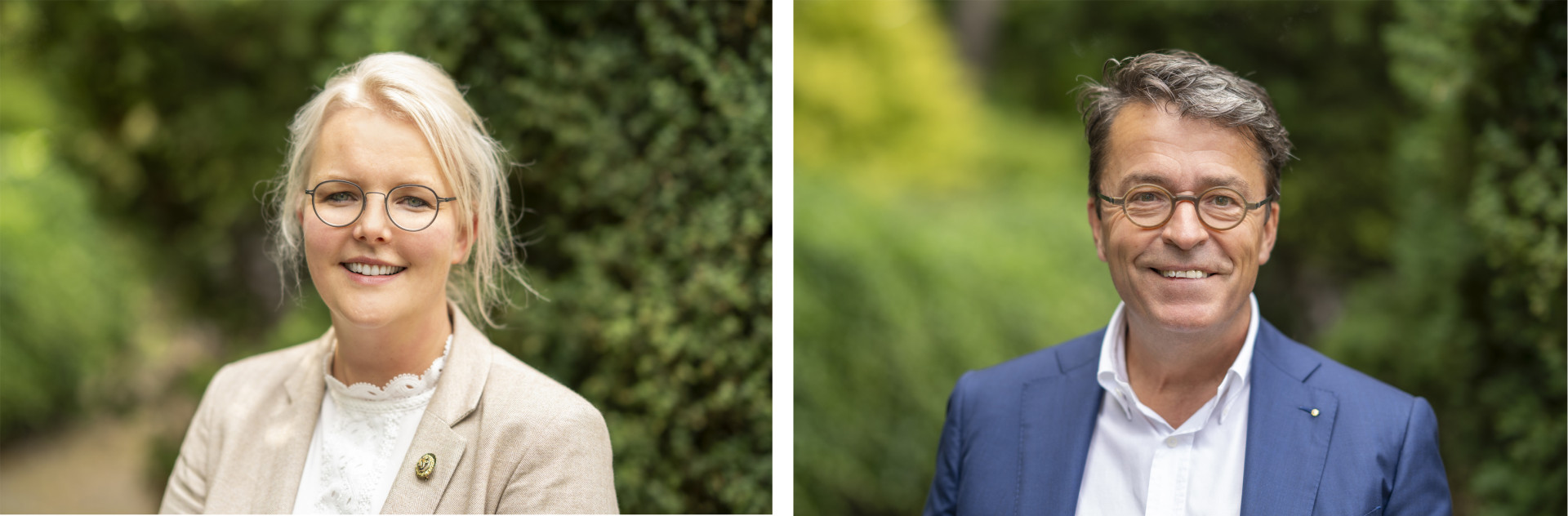
Interview with Marleen de Rond-Schouten, managing director Agro & Strategy, and Chris Hollebek, Chief Commercial Officer
“You can wake me up for this: having enough high-quality potatoes at our factories,” says Marleen, who holds final responsibility for raw material supply to the factory. While Marleen is responsible for supply, Chris oversees sales. Chris: “Over the past few years, we’ve truly transformed from a product-driven to a market-driven organisation. The customer’s needs are now central to everything we do. With every development, we ask ourselves: what problem are we solving for the customer? And why is the potato the best solution?”
Strengthening the foundation
A market-oriented strategy requires a reliable supply of raw materials. Chris emphasises the importance of a stable base: “Without raw materials, you have nothing to sell.” Marleen adds: “In the 2024 growing season, we were able to process sufficient high-quality raw materials. Looking ahead, we expect supply to increase further, particularly in Germany. While other crops such as grains, sugar beets, and even chip potatoes can fluctuate significantly in price, Avebe remains a reliable and stable partner in crop planning.”
Creating more value together
Both supply and sales were strengthened in the past financial year. Innovation has been integrated into the commercial domain, resulting in multifunctional market-business teams where sales and innovation collaborate, explains Chris. “We are shifting from being a raw material producer to a value partner for the customer. We now start with the customer’s question, and from those market insights, we build further using science and technology.”
You can wake me up for this: having enough high-quality potatoes at our factories
New horizon
“There’s still room for radically new ideas, but it’s important that most innovative activities demonstrably add value for the customer or the market,” says Chris. He explains that Avebe operates with three innovation speeds: radical, incremental, and express. Recently, Avebe successfully developed modified starches, cement-free tile adhesives, and plant-based alternatives to gelatin in vegan liquorice. “In high-volume markets, we differentiate through quality, reliability, and delivery assurance. In specialist markets, we offer technical support and customised solutions,” says Chris. “Our innovations are not only novel but also relevant and practically applicable.”
Strong for farmer members
Avebe is a reliable partner not only for customers but also for its farmer members. Marleen highlights that growers can count on a stable price, with a solid upward step each year. “Farmers benefit from fast payments, well-organised loading and transport, and receive Averis seed potatoes at a reduced rate. Moreover, Avebe growers are the first to gain access to the newest Averis varieties. Averis continuously works on improving resistance to (soil-borne) diseases, enhancing yield and storability. Our growers also receive support from the Agro field service and Agro study groups. Finally, the results from trial and demo fields provide practical insights into the latest varieties and starch potato cultivation. Avebe is not only involved but also a stable force in an ever-changing landscape.”
Reliable value partner
“To grow further as a reliable value partner, it is essential that our factories operate reliably and consistently with high-quality products. In Ter Apelkanaal, we have invested in a salt load reduction project. In Gasselternijveen, new decanters are operational, and in Foxhol, a production line has been adapted through cross-functional collaboration. In the KPW region in Germany, electrical installations have been replaced and a soft water system installed. Creating added value is only possible when the factory infrastructure is in order - covering (food) safety, raw materials, and operations,” says Chris.
Three innovation speeds to meet market and customer needs
- Radical: Starting from scratch. These are long-term trajectories.
- Incremental: Step-by-step improvement: learning and adapting.
- Express: Small-scale testing and learning, followed by rollout.

5.2Less CO₂ and electricity, plus 87 million litres of water saved
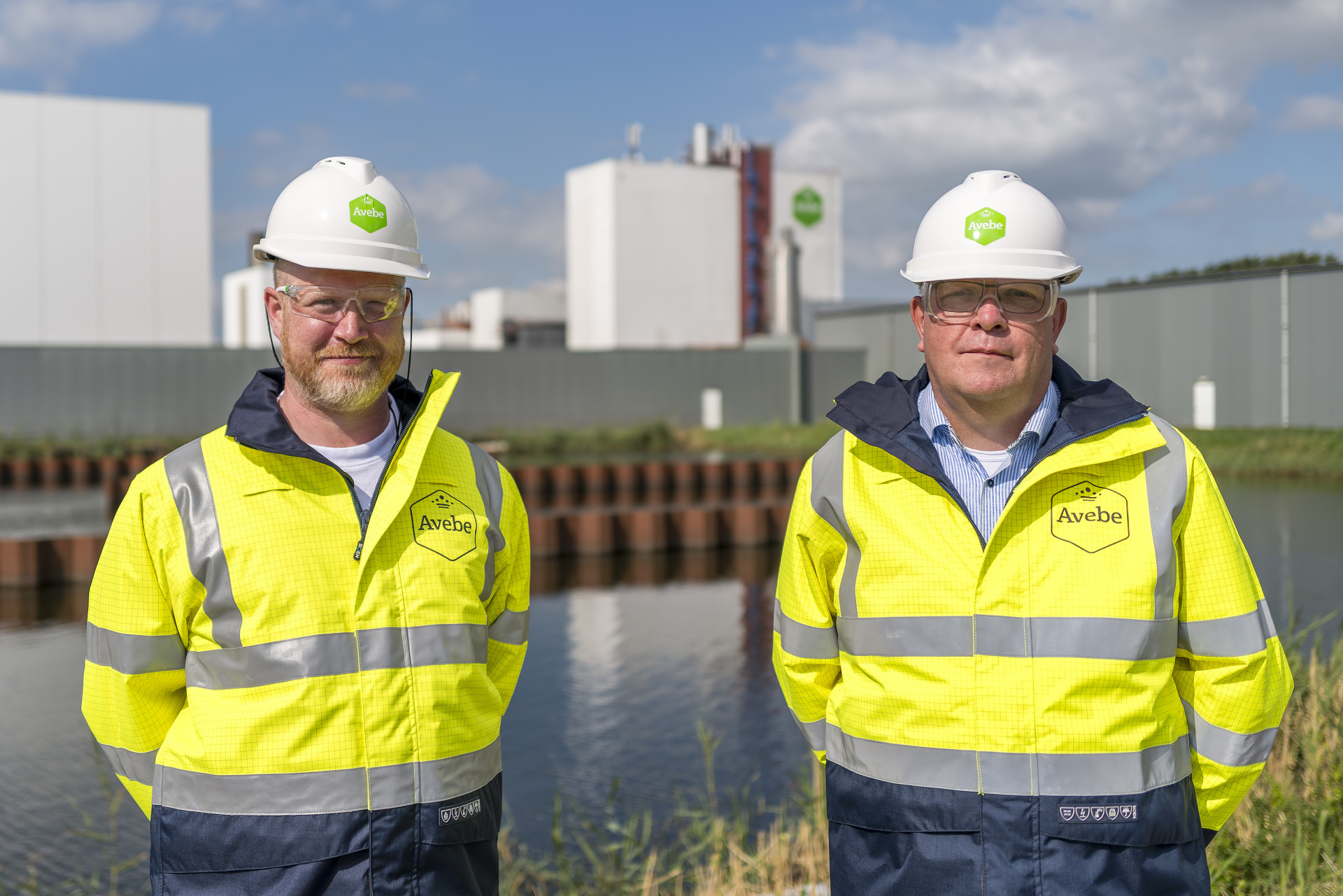
Interview with Process Development engineer Thomas Koetje and Project manager Johan Schonewille
“Figures like these really capture the imagination,” agrees Thomas, as he and Johan discuss the installation of five new process water decanters. Both are not only pleased with the outcome, but also with the journey to get there. “Our entire production site in Gasselternijveen depends on this first process step. If it stops, everything stops,” says Thomas. Johan adds: “Thanks to collaboration between engineering, production, and the supplier, we managed to keep production running throughout.”
The new decanters have delivered impressive savings
Replacement investment
The five decanters are industrial centrifuges that separate solid potato components from the liquid process water. Johan: “During a one-year trial period, we operated with one new decanter. Issues identified during this phase - such as pressure fluctuations or unstable operation - were resolved.” He adds: “Only once that single decanter was running smoothly, we proceeded installing the remaining four.” Thomas continues: “That approach worked very well. It’s now becoming the new standard. For future projects, where feasible, we will test and implement at one location first and then scale up.”
Savings in CO₂, electricity, and water
The new decanters have delivered impressive savings, Johan explains: “Dry matter content increased from around 40 per cent to 46 per cent.” Higher dry matter means better separation of process water from solids, starch, and fibres. “So few fibre particles remain in the process water now that all centrifugal sieves have been switched off,” says Thomas. This saves energy. But that is not all, the decanters also require less dilution water
87 million litres of water saved per campaign
In total, the new machines save 87 million litres of water per campaign. That is water that no longer needs to be heated above 100 degrees in the evaporator. For every five cubic metres of liquid, over 1,000 kilograms of steam are saved. Johan: “These are indeed figures that speak volumes.”
Per campaign we save:
- 87 million litres of water
- 3.3 GWh of electricity
- 1.5 million Nm³ of gas
- 18 kilotonnes of steam
Royal Avebe on the path to climate neutrality
Avebe aims to significantly reduce its environmental impact through various sustainability programs. The goals include reducing water consumption, improving energy efficiency, increasing circular operations, making procurement and production processes more sustainable, and lowering emissions.
Sustainability is embedded in the foundation of our Accelerate and Strengthen strategy. We are committed to reducing our ecological footprint, in line with the Paris Climate Agreement - both within our own operations and for our customers. Sustainability runs like a thread through the entire chain: from cultivation by our members to the delivery of our products to customers. We continue to work on more sustainable solutions. For example, our subsidiary Averis is developing new starch potato varieties that are more resistant to drought and disease and deliver higher yields per hectare.
In the past financial year, we made further progress in sustainability at our production sites. In Gasselternijveen, new process water decanters were commissioned, and in Foxhol, the installation of an e-boiler is underway. For the coming financial year, major sustainability projects are planned at our international locations. In Lüchow (Germany), new protein decanters will be installed, and in Malmö (Sweden), two large-scale energy-saving projects will begin.
Read more about our approach and results in the ESG chapter of this report.

5.3PerfectaMAR® | Successful collaboration in protein innovation
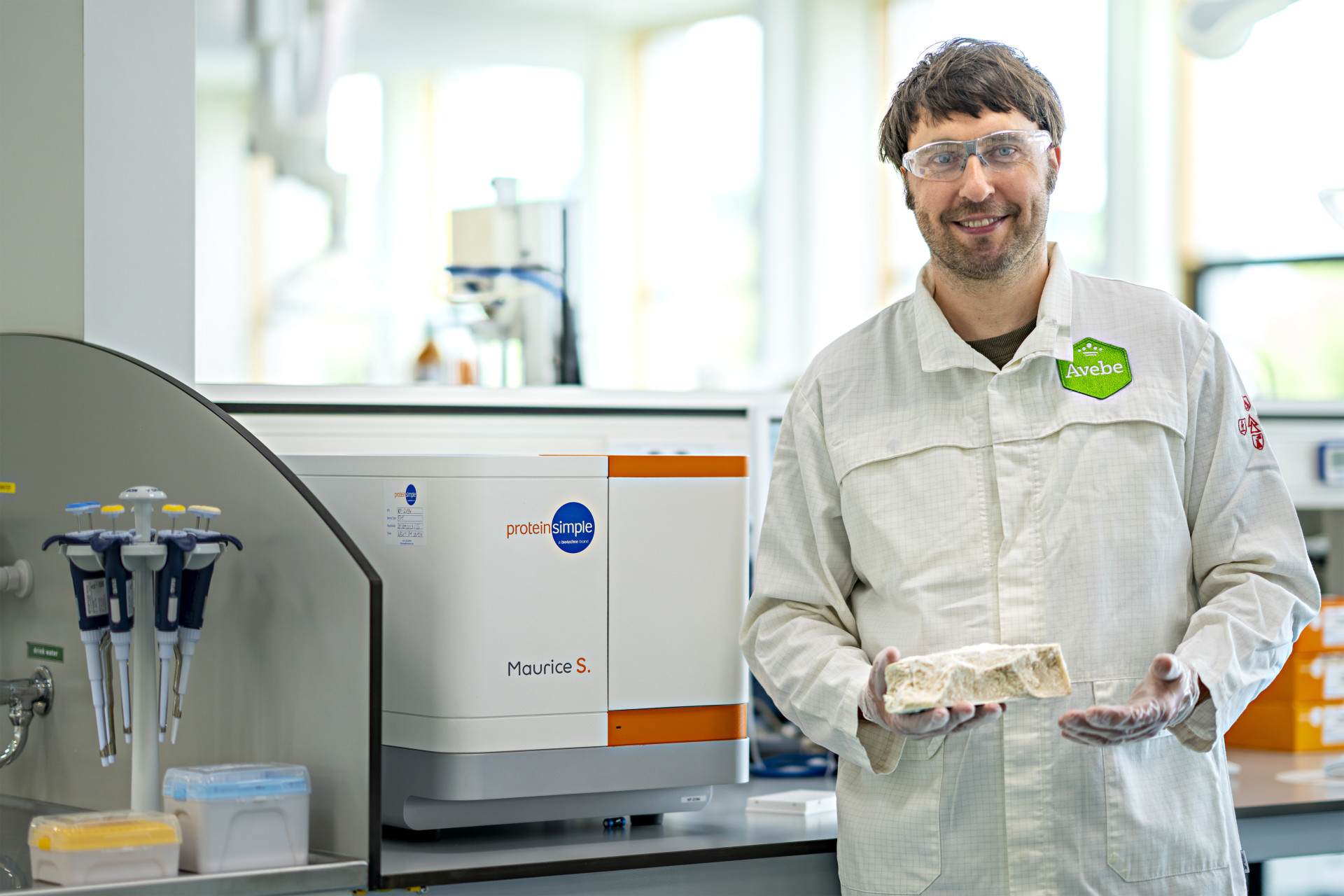
Interview with Maarten Wilbrink, Process Development specialist and protein expert
Avebe is the only producer in the world to extract high-quality functional food proteins from potatoes. One of these potato protein products has proven particularly suitable for preserving the original texture of surimi. The new product is called PerfectaMAR®, developed in our own innovation center. This new application was made possible with the support of a South Korean professor, a surimi symposium, and a collaboration with a Thai university.
The introduction of PerfectaMAR® offers strong growth potential in the Asian market
Surimi symposium & research group
Protein expert Maarten Wilbrink explains: “A South Korean research group published findings showing they had succeeded in creating a potato protein fraction with positive effects on surimi texture. At the same time, a colleague attended the surimi symposium in Thailand and met researchers from a Thai university. They assisted us with follow-up research.” The university examined the effect on fish texture, while Avebe investigated the biochemical characteristics of the applicable potato protein, Maarten adds.
Immediate customer interest
Coincidentally, an Indian surimi producer visited our innovation center. “Surimi refers to minced fish fillet used for making fish blocks. These blocks are then used to produce items like crab sticks, which we commonly refer to as surimi,” Maarten explains before continuing. “They were so impressed by the application that they began purchasing it immediately.”
Thirty different protective proteins
Maarten has a good idea why PerfectaMAR® is so well received: “Our protein product is so pure that it qualifies as an isolate. The purer the protein, the better the functionality and the better the fish texture is preserved. Moreover, our potato protein contains up to thirty different protective proteins, whereas egg white contains only five.” Maarten explains that these protective proteins help maintain fish texture when the product is heated.
Growth opportunities in Asia in Azië
The introduction of PerfectaMAR® offers strong growth potential in the Asian market, where many surimi producers are based. Maarten: “Compared to animal protein, producers need less potato protein to achieve the same functional results. This makes PerfectaMAR® not only more effective but also more cost-efficient.”
Christina Widyawati from Sales Asia about PerfectaMAR®
“Since its launch at the Food Ingredients Asia exhibition in Indonesia in 2024, PerfectaMAR® has been steadily gaining market share. Through relentless research and collaboration, we've established a solid foundation that unlocks the true intrinsic value and benefits of our products. In addition, the product is commercially attractive due to its excellent textural performance, cost-efficiency at low dosage, and non-allergenic nature. PerfectaMAR® aligns seamlessly with Avebe’s long-term objectives in the areas of innovation and sustainability.”
Innovations in potato starch: broadly applicable, with impact
In addition to the protein innovation PerfectaMAR®, Avebe continuously invests in the development of potato starch. These innovations contribute to more efficient processes, more sustainable solutions, and plant-based alternatives. Below are two striking examples for the confectionery industry.
Vitamin gummies
With PerfectaGEL®, we offer producers of vitamin gummies a vegan alternative to gelatine. In dry applications, it provides a more hygienic solution, and thanks to the shortened drying time, it saves space, time, and energy.
Confectionery
For products such as liquorice, wine gums, and other sweets, PerfectaGEL® FS also offers a plant-based alternative to gelatine. Our innovative potato starch significantly reduces drying time compared to gelatine or pectin, leading to more efficient production processes and lower energy costs.

5.4Cross-functional collaboration creates added value
Interview with Bas Gerrits, director Product Line Management
“A production line that stands still costs money. Everyone at Avebe, from management to operations, understands that a line simply needs to be running,” says Bas Gerrits. He explains that the time has come to also add value to the production lines. He refers to this as asset valorisation - a next step in the strategic pillar portfolio valorisation. Bas: “As part of asset valorisation, we have modified a production line.
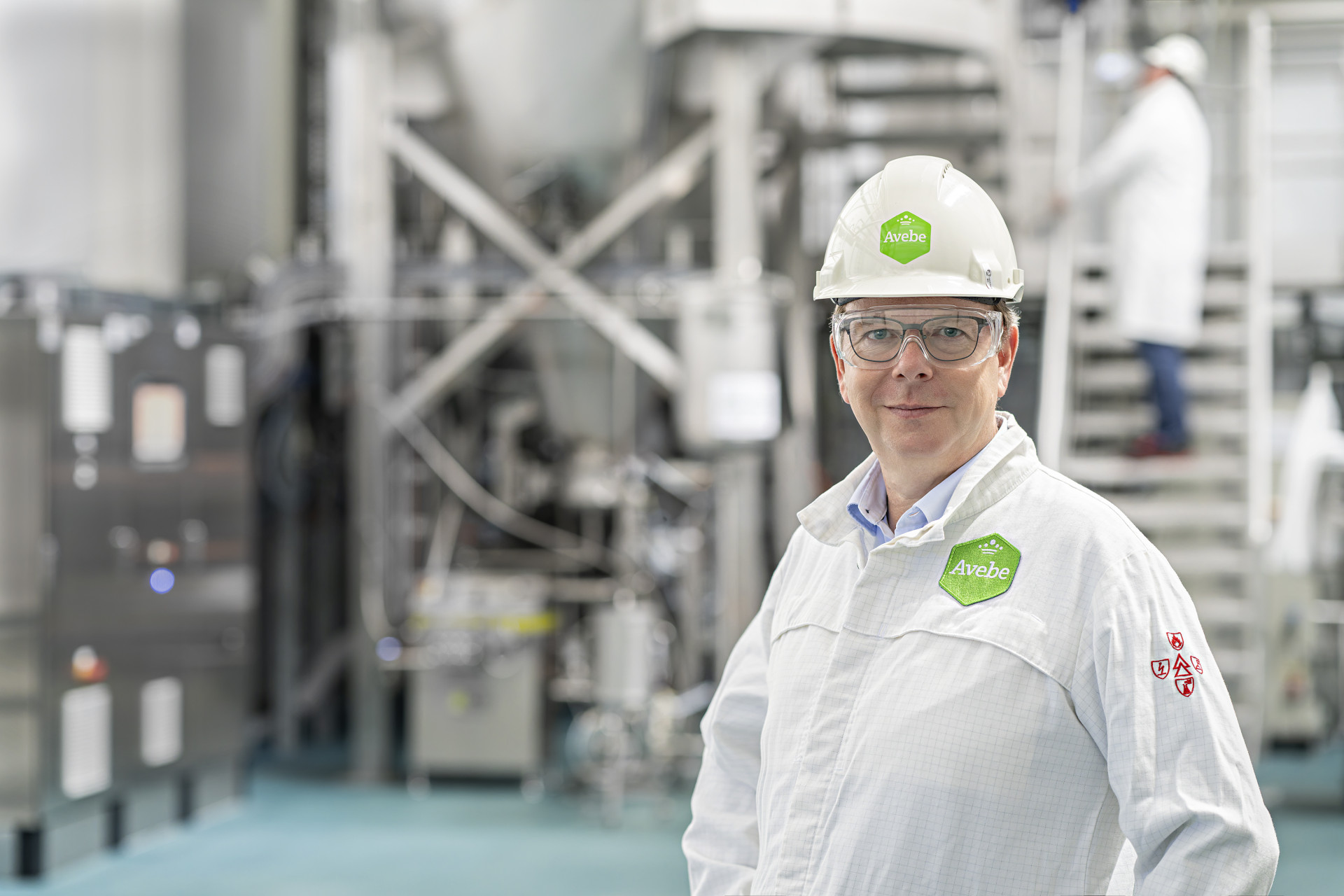
Significant contribution to campaign price growth
“Asset valorisation means we optimise the use of by-products from existing production assets and material flows. This allows us to switch more quickly between product mixes, ensuring full utilisation of the line and maximising returns,” Bas explains. He shares that derivatives previously produced by an external party are now made in-house by Avebe. “We’re using the production line more efficiently, ensuring better quality, reducing costs, and producing high-value products ourselves. Altogether, this project makes a significant contribution to the growth of the campaign price.”
We make the difference by staying flexible together
Cross-functional collaboration
The success of this project is a strong example of intensive cross-functional collaboration between our operators, quality staff, project managers, and colleagues from sales and product management. Bas: “Colleagues worked closely together to technically adapt the line and expand process and control functions. A project like this requires commitment and understanding from everyone involved. It’s crucial to inform people about the necessity. We make the difference by staying flexible together. To me, this is a true example of Play to Win - and a big compliment to everyone.”
Ronny Pals, site director Avebe: “There was enormous time pressure and multiple puzzles to solve. The fact that we succeeded is truly an example of Play to Win. By that I mean that during a high-impact project, we stayed connected across disciplines. Play to Win, in my view, is about taking responsibility and thinking outside the box to ultimately achieve results together.”

5.5Play to Win is not a slogan; it is who we are
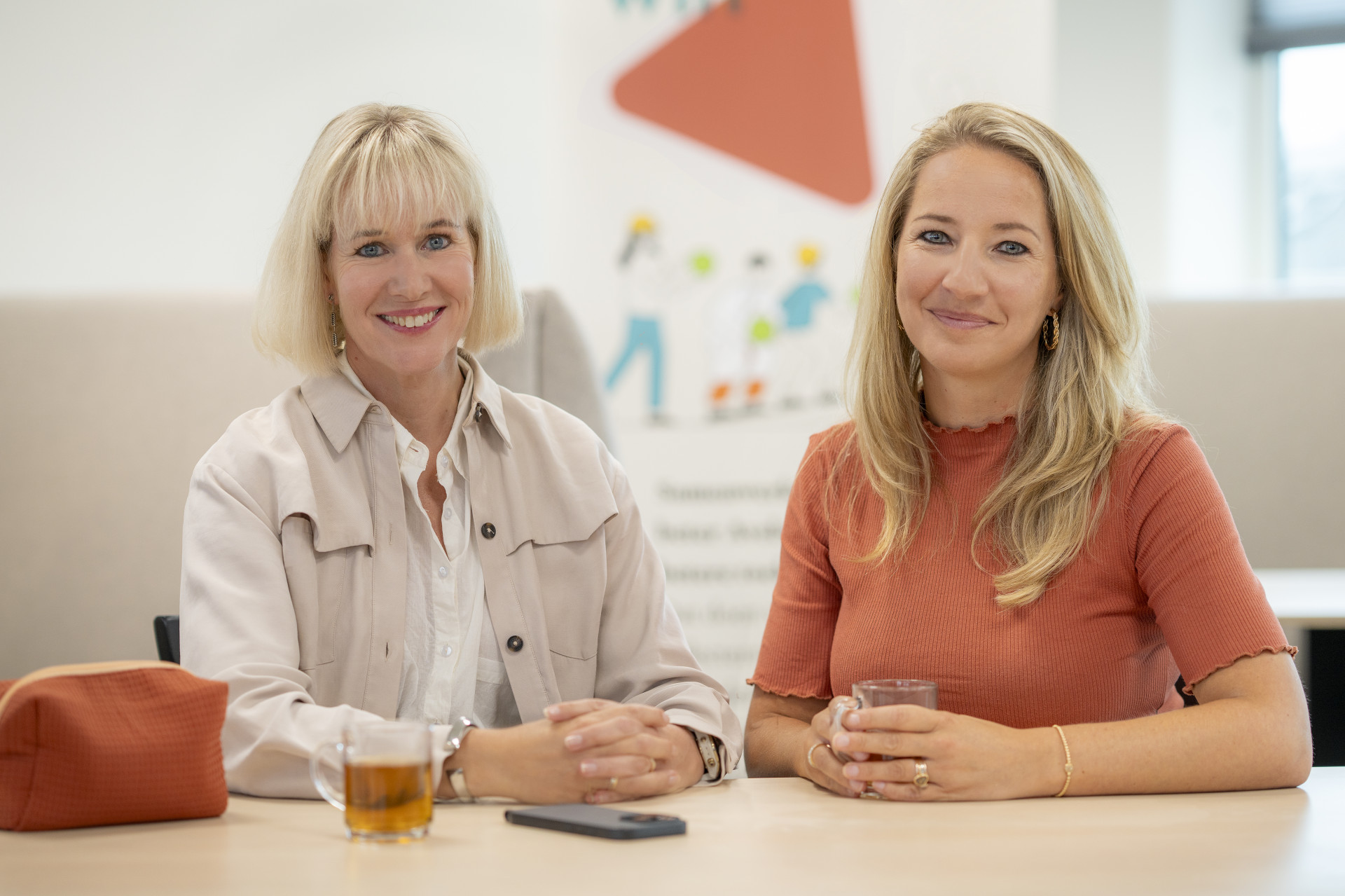
Interview Joyce de Vries-Pieterman, director Communication & Public Affairs, and Renée Gosschalk-Harms, director Acquisition & Development
“A cultural shift doesn’t happen overnight. It takes time, consistency, and commitment. And that’s perfectly fine, because real change cannot be rushed,” begins Joyce. She explains that Avebe is building on a strong foundation: “We already do many things well, and we should be proud of that.” She adds that the strategy deliberately uses the term strengthen: “It’s about reinforcing what works. We’re not starting from scratch. On the contrary, we already have a lot in place. Play to Win helps us unlock that potential even further.” The strength of Avebe lies in what can be influenced internally: culture. Joyce: “In a world that’s constantly changing, we make the difference with clear core values and competencies. That requires us to become more agile and entrepreneurial. And yes, we’re allowed to make mistakes, that’s how we learn.”
In a world that’s constantly changing, we make the difference with clear core values and competencies
Cultural change is a shared responsibility
Renée adds: “Play to Win translates our culture into concrete behaviour in the workplace.” She explains that it requires engagement from everyone - new colleagues as well as those who have worked at Avebe for decades. “We see colleagues across the organisation embracing Play to Win and interpreting it in their own way. Flexibility and ambassadorship make the difference.” Ambassadorship does not have to be grand or formal. According to Renée, it is in the small things: a colleague who fosters connection, someone who shows ownership, or a team member who helps others go the extra mile. “You don’t have to excel in all five competencies,” Renée explains. “Someone might be particularly strong in connecting and take on a role model position in that area. That’s just as valuable.”
We want to preserve a lot of behaviours
“We are not going to do things completely differently; we are going to do them better. Together. With purpose and pride,” says Joyce. Renée adds: “We are making Play to Win tangible and applicable in everyday practice. At the same time, we want to preserve many things, such as the pride, loyalty, solution-oriented mindset, and down-to-earth attitude that are so characteristic of Avebe.”
From program to second nature
The ambition is clear. Play to Win should not remain a standalone program but should become a natural part of Avebe’s culture. Renée: “We still call it Play to Win, but in a few years, we might not need that name anymore. It will be so deeply embedded in who we are that it no longer requires a separate label. Because we believe in growth through people.”
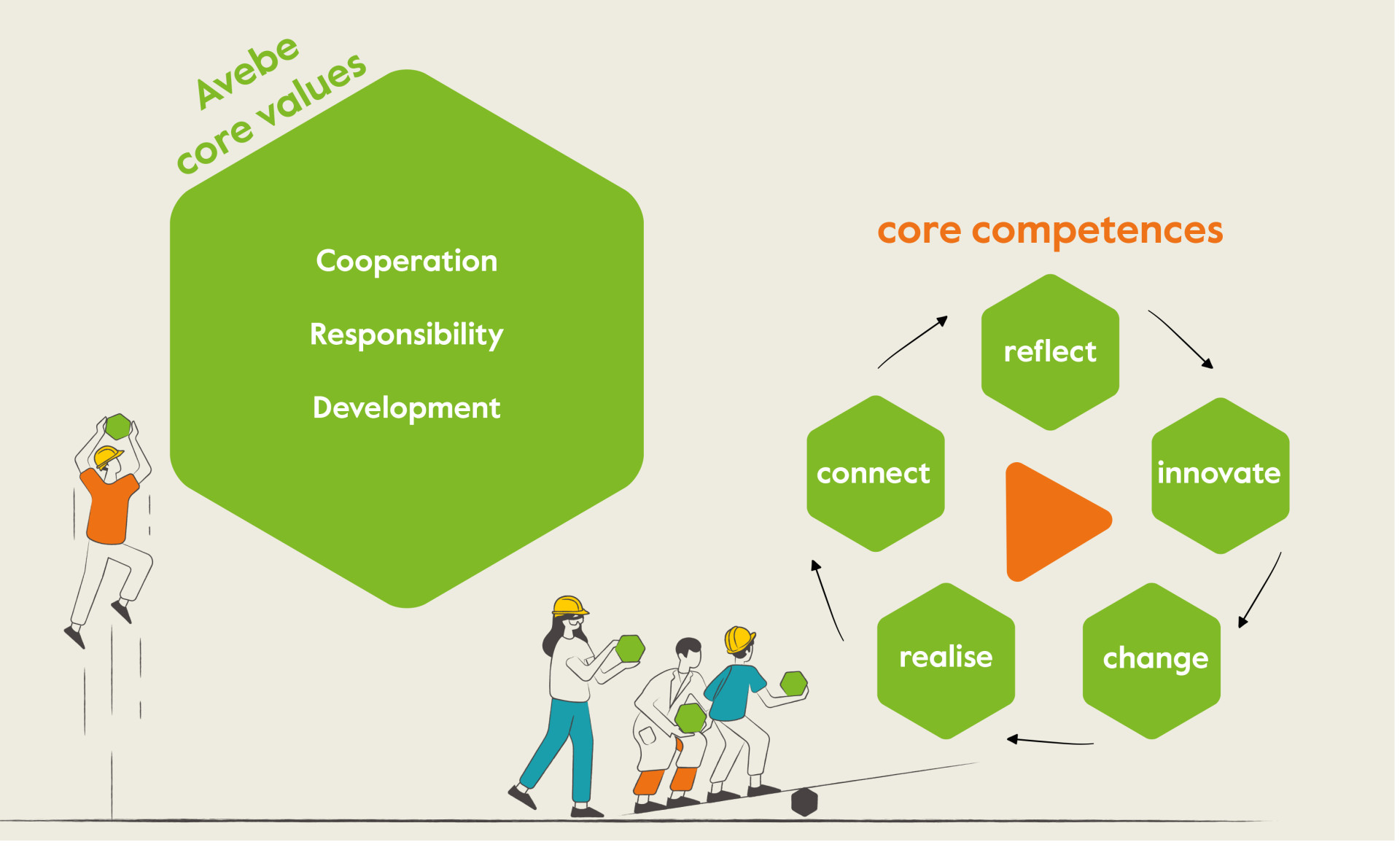
These core competencies are reflected in:
- Various Avebe communications, such as employer branding and job postings
- The structure and design of job interviews
- Selection and development assessments
- Our year-round HR dialogue cycle
- Programs for talent development, education, and training
- Job profiles

5.6Cross-border knowledge exchange in the KPW region
Interview with advisor Albert Wolfs and Clara Borm, grower and Avebe member
“What can Dutch farmers learn from their German colleagues? Plenty. The level of knowledge here is also very high,” says Albert Wolfs enthusiastically over the phone. He is in the car, returning from the KPW region - a part of Germany roughly between Hamburg and Hanover. It’s one of the hottest days of the year, and Albert has just been digging a test pit in the field with a German study group. “In the KPW region, growers are generally more accustomed to dealing with heat and drought."
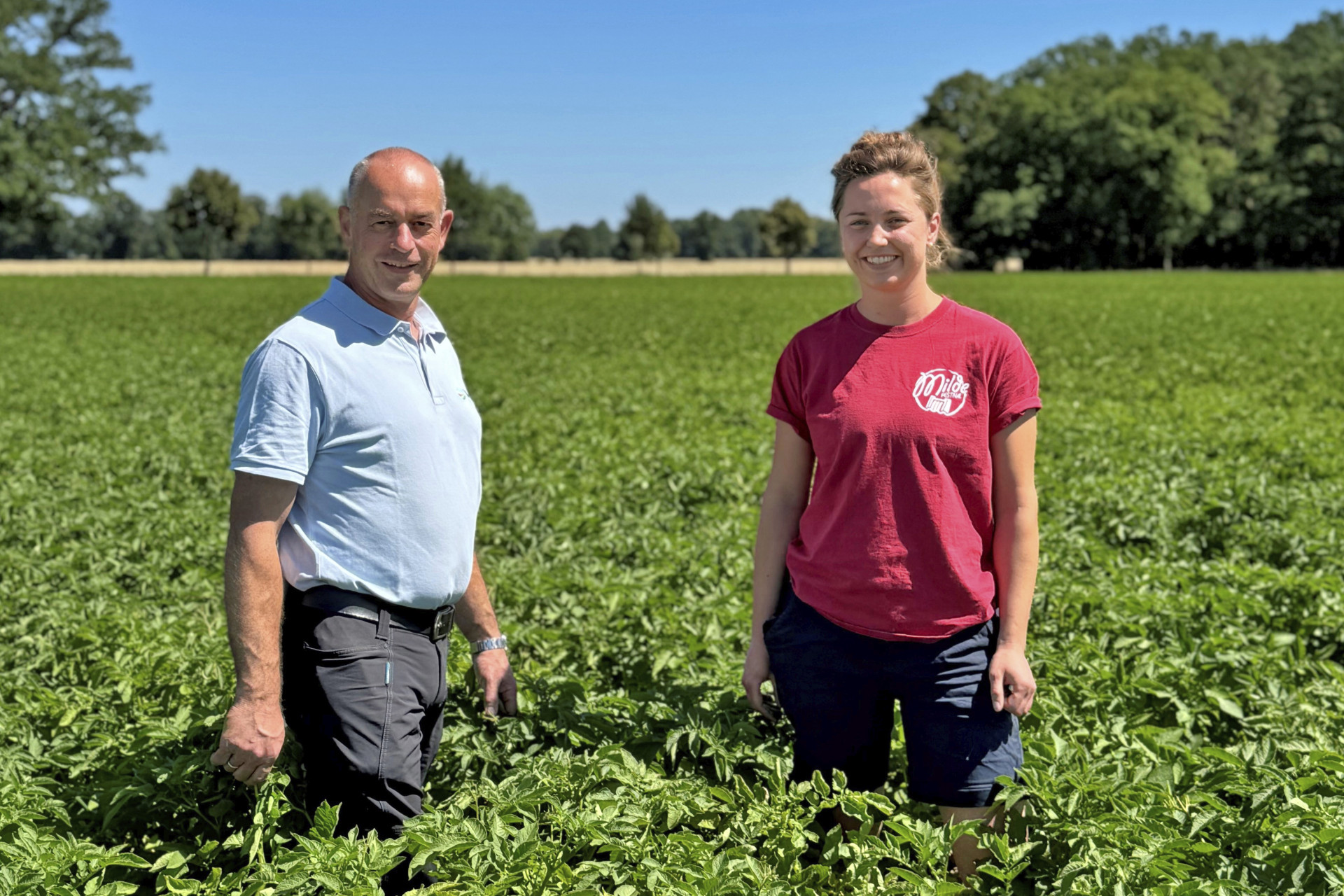
Every study group shares the same goal: improving returns and reducing costs
Higher temperatures and less rainfall
“In addition to higher temperatures, farmers in this region receive less rainfall - around 150 millimetres per year. Unlike in the Netherlands, they also face a ten-year irrigation quota,” Albert explains. “That sometimes requires strategic decisions: which crops do you irrigate and which do you not? That is something we are not used to in the Netherlands.” His study group currently includes a grower experimenting with drip irrigation. “Last year, we visited her to see how it works. She lays the irrigation hoses between the potato ridges, and the whole group observes. She shares her findings, and we all learn. That is wonderful.”
Stones and wider cultivation
Another striking difference is the large number of stones. As a Dutch farmer, you might think: ‘Just remove those stones from the field,’ but growers here know that de-stoning also has drawbacks. The soil structure becomes too fine, which can actually worsen root development. According to Albert, the stones also have advantages: in hot weather, the ridges retain less heat.
Mostly similarities
Albert emphasises that there are many similarities between the German and Dutch study groups. All Avebe study groups collect data in the same way. Field visits are combined with discussions on current cultivation issues. Every study group shares the same goal: improving returns and reducing costs. Everyone is open, eager to learn, and enthusiastic about sharing knowledge. “This creates insight and connection across borders. I bring knowledge, but I always take something back as well. When growers improve, we improve together - and so does Avebe. That is what I enjoy most!”
Grower Clara Borm learns a lot from the study group
“The crop assessments by Albert have taught me a lot about diseases and pests in potatoes,” says Clara Borm. The 26-year-old farmer lives in Bismark in the Altmark region (Saxony-Anhalt) and runs an arable farm with her family, growing silage maize, grains, and - since about ten years - potatoes. She especially values the exchange with colleagues in the Avebe study group: “Regularly digging up soil and root profiles clearly shows how important good plant conditions and the quality and preparation of seed potatoes are. I can wholeheartedly recommend joining the study group - especially because Albert, as facilitator, always keeps the link to practical application.”
5.7Averis Route 2030 | Commercial shift and sharpened focus
Interview with Martijn Zwinderman, Molecular specialist, and Bastiaan Schoenmaker, Site director of Averis
A new route means both a commercial shift and a sharpened focus. That is what Bastiaan and Martijn share in a conversation about the new strategy of Averis, the 100 per cent subsidiary of Avebe. During the interview, Bastiaan, as Site director, acts as the generalist who speaks about direction, opportunities, and the strength of the Averis team. Martijn, in turn, is the data-driven specialist who dives straight into the content. One provides direction while the other contributes detail, creating a complementary partnership.
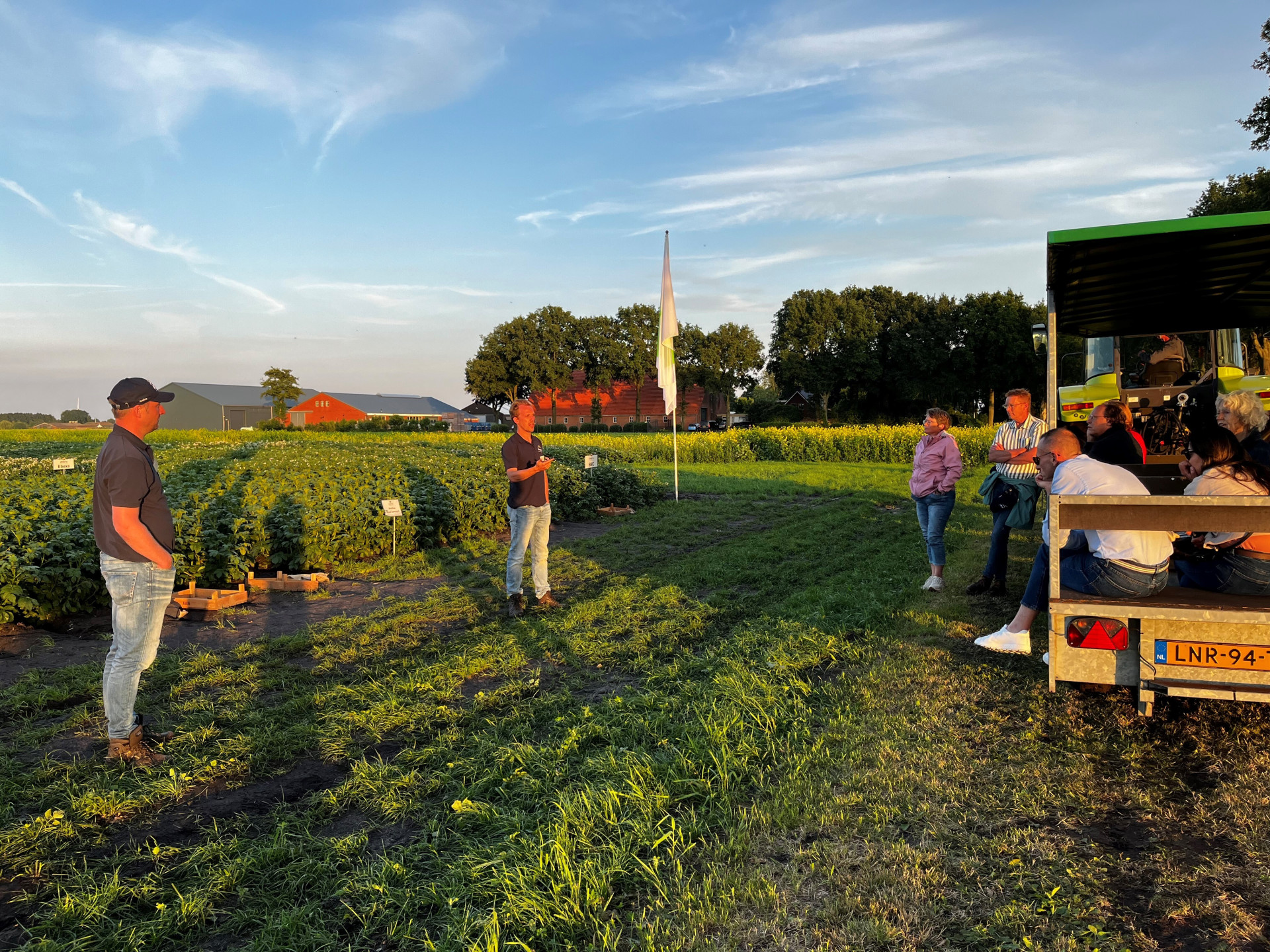
Anniversary | 70 years of Averis
During the starch potato days in Valthermond, no fewer than 500 visitors celebrated the 70th anniversary of Averis. Farmer members, colleagues, and other interested parties looked not only back, but also ahead. Visitors explored the trial fields, greenhouses, and laboratories. The day was filled with innovations around seed potatoes and the potato varieties of the future.
The power of innovation
“In the coming years, we will focus on functional innovations,” says Martijn. Averis is shifting away from fundamental research and towards practical applications. “We use technology to map traits such as starch content, storability, and disease resistance early in the breeding process,” Martijn explains. “We do this using DNA technology and statistical models. This allows us to develop potato varieties more efficiently, with strong starch yields and improved disease resistance.”
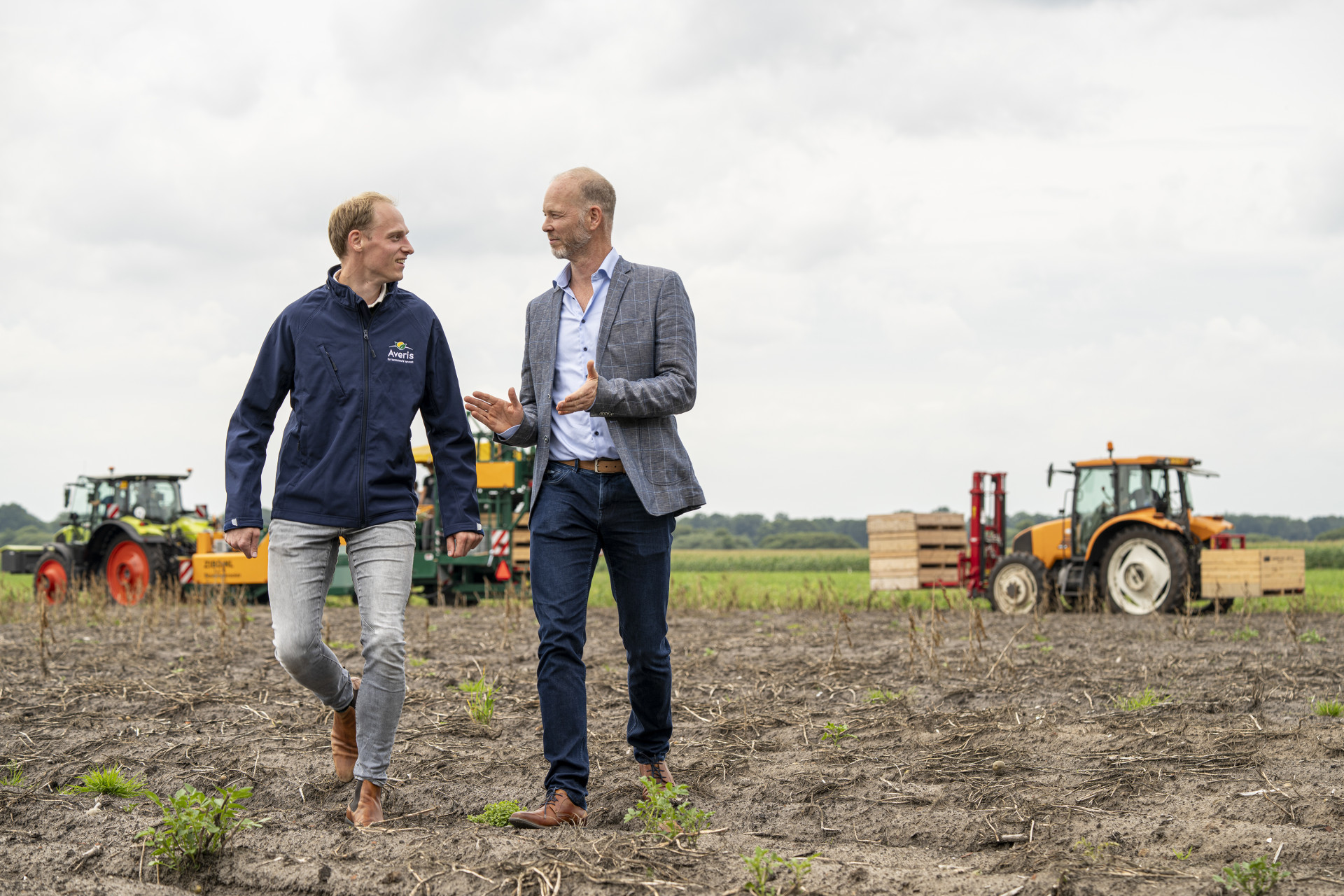
Although we are certainly proud of our highly resistant varieties, I am especially proud of the team we have in place
This team strengthens the foundation
“Although we are certainly proud of our highly resistant varieties, I am especially proud of the team we have in place. We work efficiently and effectively together. We are agile and motivated. Everyone is eager to move Averis forward through the upcoming changes. The knowledge and expertise we have built up over the past 70 years at Averis, combined with the ambitions of the Averis Route 2030 strategy, will open up expansion opportunities into new markets and with new varieties,” says Bastiaan.
Expansion into new markets
The Averis Route 2030 strategy is outlined in steps, Bastiaan explains. Step one: take the current starch portfolio abroad. Denmark is the first candidate, followed by other countries. Step two: apply Averis varieties to other uses, such as flakes or granules. Step three: develop other potato types, such as chip potatoes, which represent the largest and fastest-growing market globally. Averis is ready to strengthen its position step by step in both existing and new markets.
Anniversary | 70 years of Averis
During the starch potato days in Valthermond, no fewer than 500 visitors celebrated the 70th anniversary of Averis. Farmer members, colleagues, and other interested parties looked not only back, but also ahead. Visitors explored the trial fields, greenhouses, and laboratories. The day was filled with innovations around seed potatoes and the potato varieties of the future.
5.8Life Saving Rules in practice: train, apply, strengthen
Interview with Robert-Jan Bannink, director QESH
Safety is part of the healthy foundation of the Accelerate and Strengthen strategy. “In 2023, we introduced the Life Saving Rules. These are essential safety rules we use to minimise risks and prevent accidents. It is an important step towards a safe and healthy working environment for everyone at Avebe,” says Robert-Jan Bannink.
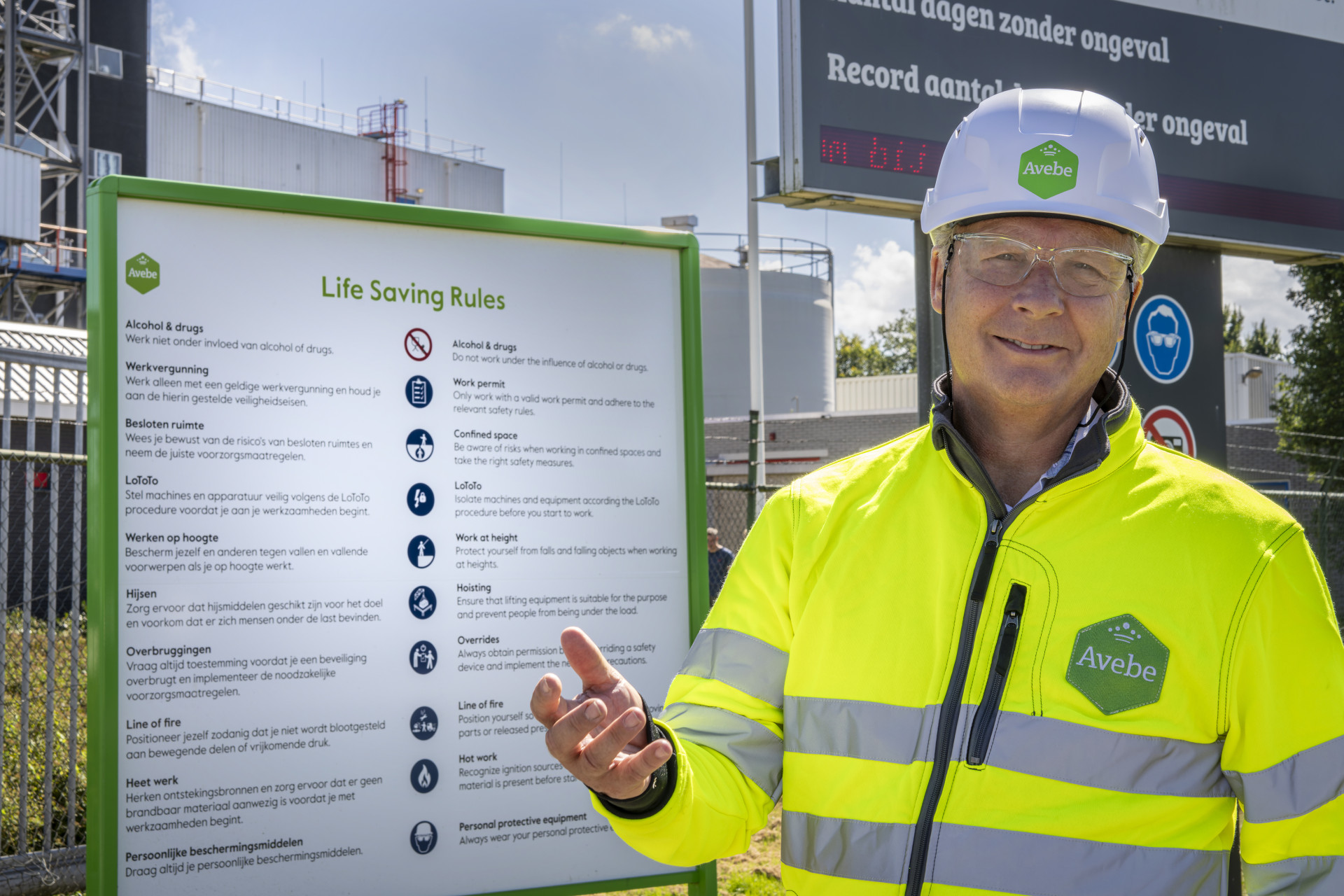
Doing everything we can to guarantee the safety of our employees and contractors
Clear responsibilities and actions
One of the ten Life Saving Rules is: use the work permit and comply with the specified safety requirements. “So that an installation cannot be switched on while someone is working on or inside it,” Robert-Jan explains. “There was nothing wrong with the work permit and the old procedure, but it was not always formally clear who had to do what and when. The task-specific requirements were not always feasible either.” He adds that it was often up to employees to decide what was necessary. “That is not what we want. Now it is clear what needs to be done and who is responsible. Even if something goes wrong,” says Robert-Jan.
By colleagues, for colleagues
It is not just about writing and presenting new procedures. People also learn by doing. Robert-Jan shares that a group of engaged colleagues developed training materials and set up a training location in a vacant part of the factory. There, no fewer than 500 colleagues received the Work Permit training. The practical assignment: secure the agitator in the reactor for maintenance work. The theory learned in the morning was applied in the afternoon. Robert-Jan: “Everyone completed a work permit and physically secured the reactor.”
Towards a stronger organisation
Robert-Jan also took part as a trainer: “When you are delivering a training, you hear things you would not otherwise hear. You can act on that information. It makes the organisation stronger.” The next step is to comply with the procedure and experience it as intended: “Doing everything we can to guarantee the safety of our employees and contractors.”